
Orthodontic Exposure and Bonding in Clayton, MOn
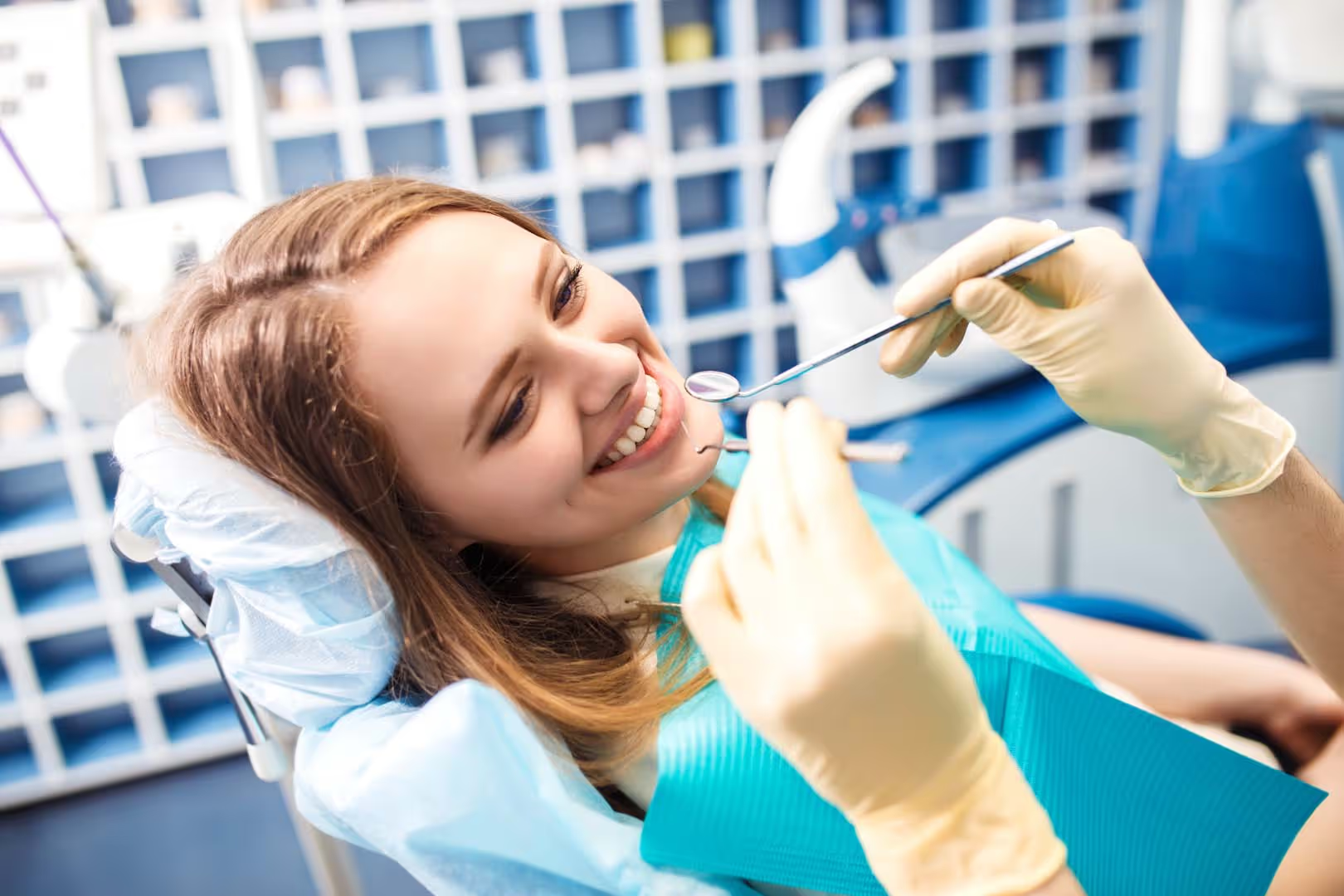
When a permanent tooth — most often an upper canine — fails to come in on its own, orthodontic treatment alone isn't always enough to bring it down. That's where orthodontic exposure and bonding comes in. At Gateway Oral and Maxillofacial Surgeons of St. Louis, we work directly with your orthodontist to uncover the impacted tooth, bond a small bracket and chain to it, and give your orthodontist a handle to gently guide it into its proper place in the smile.
It's a minor procedure with a big payoff: it preserves your natural tooth and avoids the need for an implant, bridge, or long-term gap later in life.
What Is Orthodontic Exposure and Bonding?
Exposure and bonding is a short surgical procedure where an oral surgeon:
- Uncovers the crown of an impacted tooth that's stuck beneath gum tissue or bone
- Attaches a small orthodontic bracket with a thin gold chain to the exposed tooth
- Closes the tissue, leaving the chain accessible for your orthodontist
Once healed, your orthodontist connects the chain to your braces or aligner appliance and applies gentle, steady traction over the following months to ease the tooth into alignment.
Who Needs This Procedure?
Exposure and bonding is most commonly recommended for:
- Impacted maxillary canines — the second most commonly impacted teeth after wisdom teeth
- Impacted premolars or incisors that have failed to erupt on schedule
- Children and teens identified during orthodontic evaluation (typically ages 11–14)
- Adults whose impacted teeth were never addressed earlier
If left untreated, an impacted tooth can damage the roots of neighboring teeth, form a cyst, or require extraction later. Early intervention almost always leads to better outcomes.
What to Expect on the Day of Surgery
The procedure is typically performed in our Clayton office under local anesthesia with IV sedation or general anesthesia — whichever is most appropriate for the patient's age, anxiety level, and case complexity.
During the procedure:
- A small opening is made in the gum tissue over the impacted tooth
- If bone covers the tooth, a minimal amount is carefully removed
- A bracket with a gold chain is bonded directly to the enamel
- The tissue is repositioned and sutured, with the chain left visible
The appointment itself usually takes 45–60 minutes.
Recovery and Healing
Most patients are back to normal activity within 2–3 days. You can expect:
- Mild swelling and soreness for the first 48–72 hours, managed with ice and over-the-counter or prescribed pain medication
- A soft-food diet for about a week (think yogurt, mashed potatoes, pasta, smoothies)
- Gentle oral hygiene around the surgical site
- A follow-up with your orthodontist in 2–4 weeks to begin applying traction
Full guidance for recovery, including detailed after-care instructions, can be found on our Patient Education page.
Coordinated Care With Your Orthodontist
Exposure and bonding is a true team procedure. Before surgery, we review your orthodontist's treatment plan, diagnostic records, and 3D CBCT imaging to confirm the tooth's exact position and the best angle for bracket placement. After surgery, your orthodontist takes over to guide the tooth into alignment.
If you're an orthodontist looking to refer a patient, visit our Referring Doctors page for referral forms and imaging requirements.
Why Choose Gateway Oral and Maxillofacial Surgeons?
Both Dr. Hiran Fernando and Dr. John Chiapel are experienced oral and maxillofacial surgeons serving patients throughout St. Louis and the surrounding communities. Our practice is known for its warm, family-friendly atmosphere and thorough patient education — especially important for young patients and their parents, who often feel anxious before a first surgical experience.
FAQs — Orthodontic Exposure and Bonding
Lorem ipsum dolor sit amet, consectetur adipiscing elit. Suspendisse varius enim in eros elementum tristique. Duis cursus, mi quis viverra ornare, eros dolor interdum nulla, ut commodo diam libero vitae erat. Aenean faucibus nibh et justo cursus id rutrum lorem imperdiet. Nunc ut sem vitae risus tristique posuere.
How long does exposure and bonding surgery take?
The surgery itself usually takes 45–60 minutes, though you should plan for about two hours at our office including prep and recovery.
Will my child be awake during the procedure?
Most patients receive IV sedation or general anesthesia, so they are comfortably asleep throughout. Local anesthesia alone is an option for older, cooperative patients.
How painful is recovery?
Discomfort is typically mild and well-controlled with ice, rest, and over-the-counter or prescribed pain medication. Most patients return to school or work within 2–3 days.
When will the orthodontist start pulling the tooth down?
Your orthodontist will typically begin applying gentle traction about 2–4 weeks after surgery, once the tissue has healed.
How long until the tooth is in its proper position?
Guided eruption can take anywhere from 6 to 18 months depending on the tooth's starting position, angle, and the patient's individual response.
Will my child need stitches?
Yes, we place dissolvable sutures that typically fall out on their own within 1–2 weeks.
Does insurance cover exposure and bonding?
Many medical and dental insurance plans cover part or all of the procedure. Our team will verify your benefits and review any out-of-pocket costs before scheduling.
What happens if the tooth doesn't respond to traction?
In rare cases where the tooth cannot be guided into position, alternative treatments such as extraction followed by a dental implant may be considered.
Schedule Your Consultation
If your orthodontist has recommended exposure and bonding, or you have questions about an impacted tooth, we're here to help.